
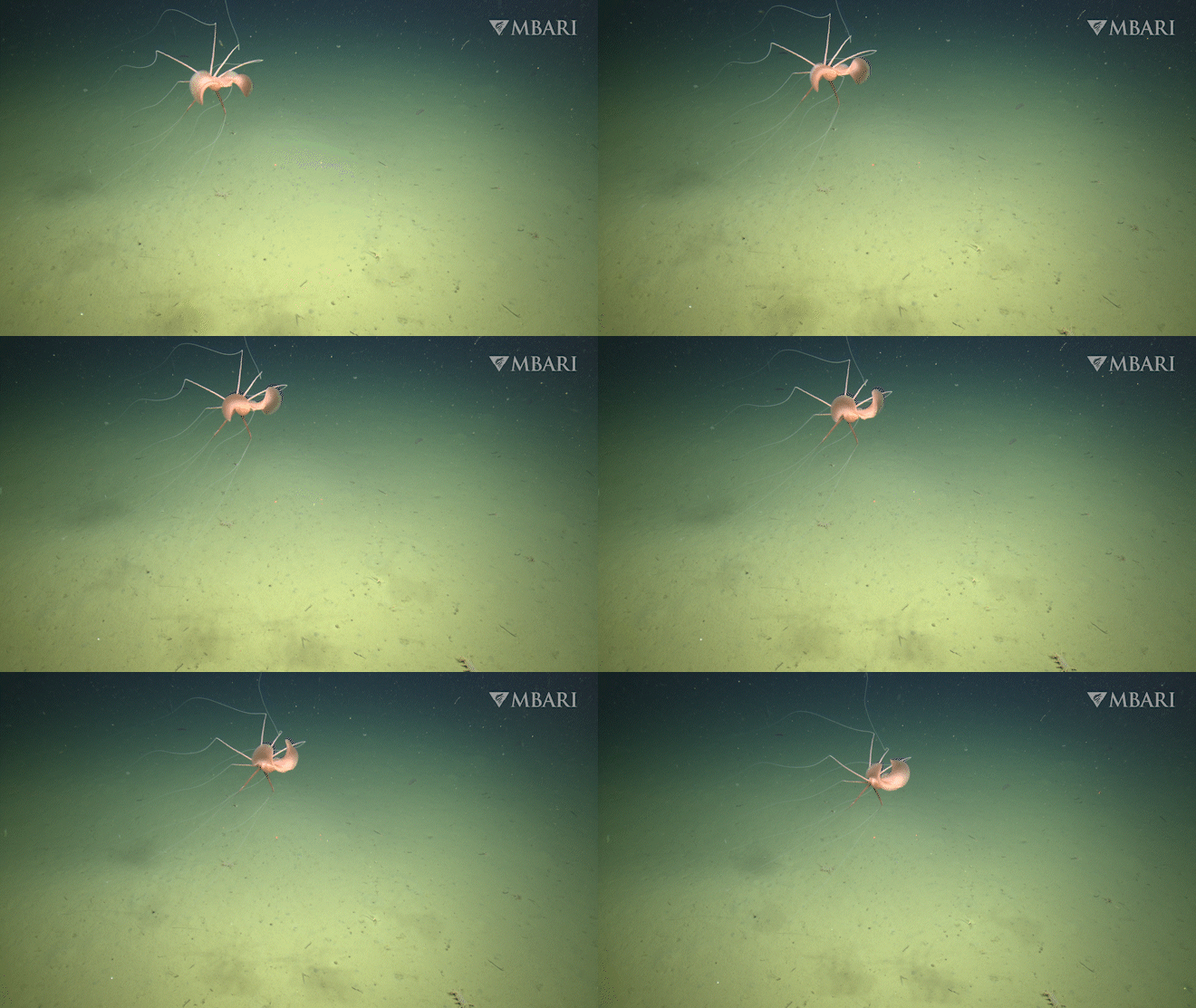
Researchers have obtained the first-ever confirmed video footage of a bigfin squid (Magnapinna) in the northeastern Pacific Ocean. The sighting occurred during a deep-sea expedition led by the Monterey Bay Aquarium Research Institute (MBARI) in collaboration with the National Oceanic and Atmospheric Administration (NOAA).
The footage, recorded on August 7, shows the elusive cephalopod drifting above the seafloor at a depth of approximately 10,751 feet (3,277 meters). The encounter took place near the Davidson Seamount, located about 80 miles (130 kilometers) southwest of Monterey, California. Scientists were piloting MBARI’s Doc Ricketts submersible as part of a 10-day Seamount Hotspots expedition that ran from August 3 to August 12.
Olívia Soares Pereira, a deep-sea ecologist and postdoctoral fellow at MBARI, described the squid holding what researchers termed the “elbow pose,” with its long arms and tentacles bent at sharp 90-degree angles. Based on behaviors observed in other deep-sea squids, Pereira believes this posture is likely a feeding strategy designed to prevent the limbs from tangling while passively trapping prey.
Bigfin squids are recognized as the deepest-dwelling known squid species, with specimens collected from depths exceeding 20,000 feet (6,000 meters). Their distinctive appearance is due to tentacles and arms that can reach up to 20 times the length of their bodies. The individual captured in the new video measured approximately 4.1 feet (1.25 meters) in total length.
This discovery marks a significant milestone, as the last time MBARI researchers encountered a bigfin squid was off the coast of Hawaii in 2001. Globally, only around 70 of these animals have been observed or collected. Pereira noted that she had also spotted two other bigfin squids earlier in the year during an expedition to the Mid-Atlantic Ridge with the Schmidt Ocean Institute.
The team was originally investigating biodiversity hotspots within the Monterey Bay National Marine Sanctuary, specifically Davidson Seamount and Sur Ridge. According to Pereira, the team had been expecting to observe deep-sea corals, sponges, brooding octopuses, and feeding beaked whales. The unexpected appearance of the rare squid highlighted the rich habitat complexity of the region.


Only seventy sightings ever? These things are incredibly rare. I wonder if the Northeast Pacific population is healthy enough to survive.
That elbow pose is hilarious. They really do look like they are stretching in zero gravity.