
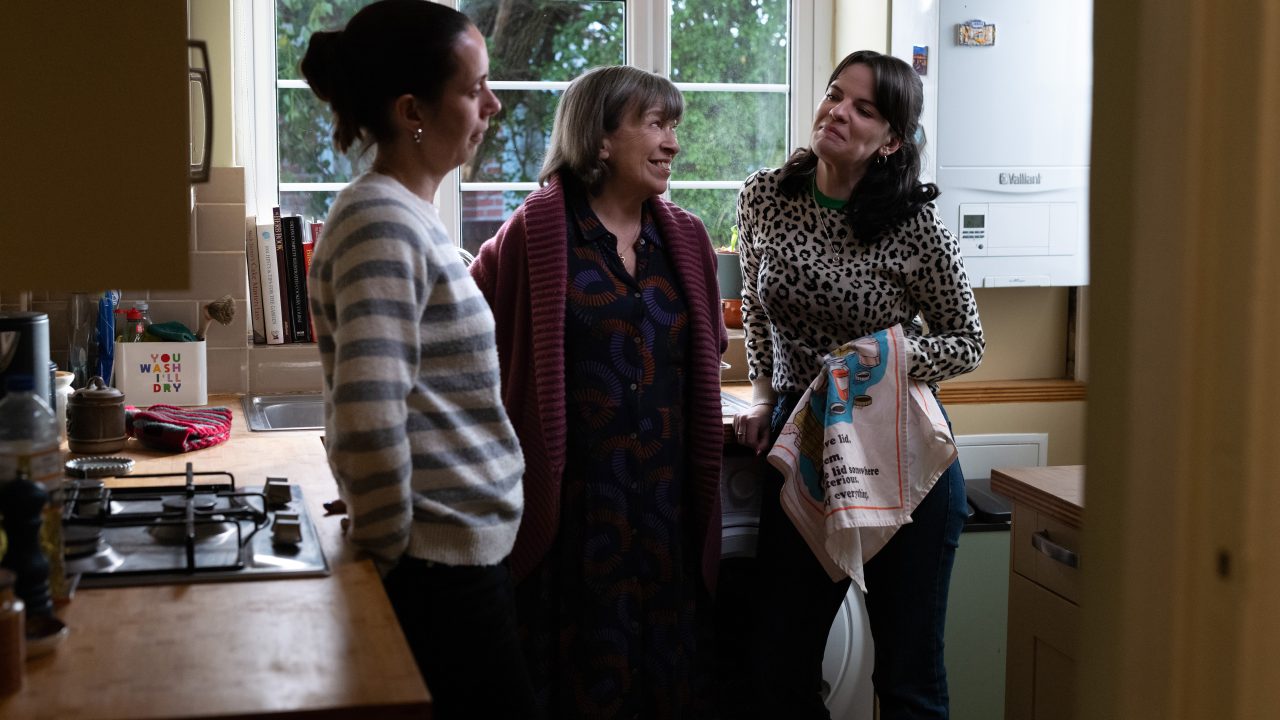
British filmmaker Mike Leigh is known for occasionally crafting movies where the narrative and drama coalesce into a profound vision of human complexity, as seen in acclaimed works like “Secrets & Lies,” “Topsy-Turvy,” and “Another Year.” However, his latest feature, “Tender Loving Care,” while competent, does not reach those heights. The film presents a cast of vivid, lively characters performed with Leigh’s signature verve, yet it feels more schematic than emotionally resonant.
The title references several elements within the story: the professional care provided by social workers Amy (Kate O’Flynn) and her best friend Rosie (Alice Bailey Johnson), their mutual support, and the care Amy’s aging parents provide. Set against a backdrop of global budget cuts in the social care sector, the film explores how these resources are withdrawing, leaving workers like Amy struggling to connect with the teens and families they serve.
Leigh, along with real-life partner Marion Bailey, offers a touching portrait of Amy’s conventional middle-class parents. It is Paul Jesson, however, who delivers the film’s most moving performance as Amy’s father, whose gradual onset of dementia serves as a stark reminder of the fragility of memory and identity. The film notes this reality without melodrama, suggesting that this is precisely when care is most needed.
Despite these strengths, the reviewer finds the film intermittently compelling but ultimately scattersshot. The romantic frustrations experienced by Amy and Rosie are presented but not deeply interrogated, leaving their desires and pains underdeveloped. The narrative suggests a “sociological” view rather than a deep dive into individual destinies. This is exemplified by the bookend story of a homeless man who vanishes into the system, a figure who resembles Amy’s father if left uncared for. While this creates an abstract statement about societal failure, it leaves the audience’s emotions untapped, resulting in a film that tickles rather than transforms.


Leave a Reply