
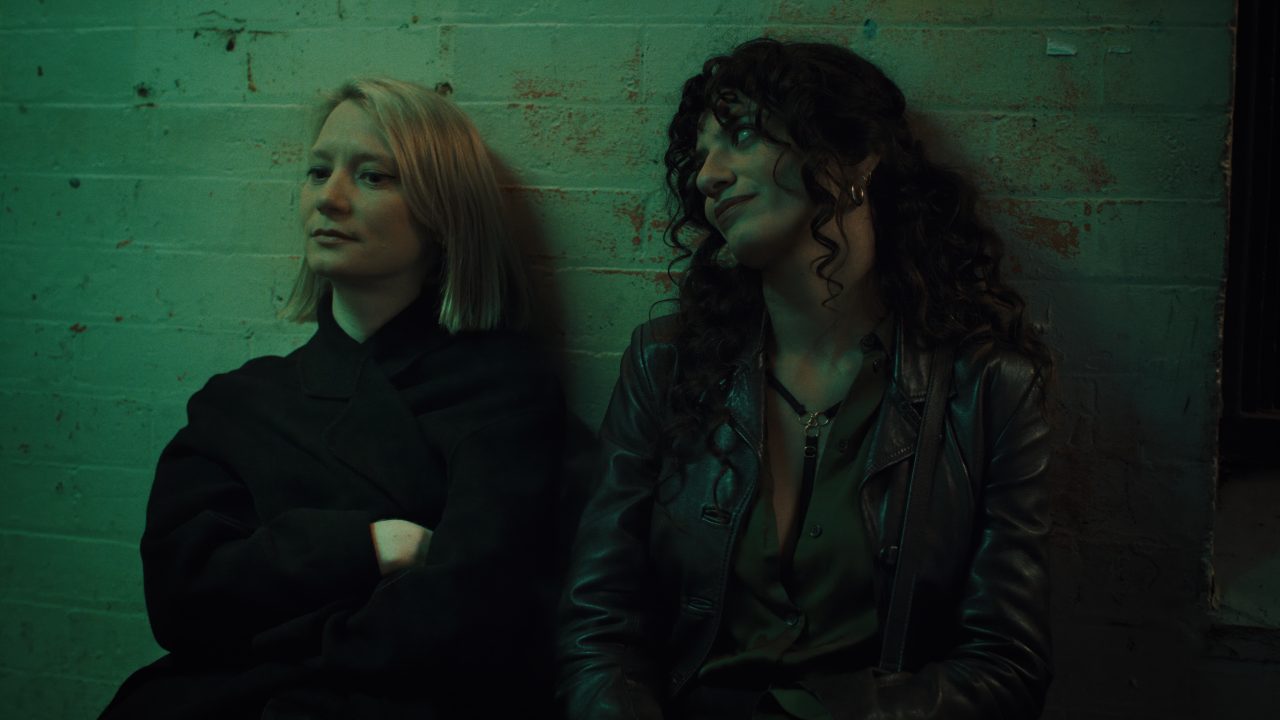
Polish-Australian novelist Agata, portrayed by Mia Wasikowska, travels to Sarajevo in “Agata the Writer,” a wry and unconventional debut from multi-hyphenate artist Kuba Dorabialski. Intending to research a project centered on father-daughter dynamics during the Bosnian War, Agata immediately questions her ability to authentically depict the conflict, setting the stage for a film that explores immigrant identity, trauma tourism, and artistic integrity.
The narrative mirrors the struggles of translating the interiority of writing to the screen, yet Dorabialski expands the scope beyond simple writer’s block. The film examines how Agata’s professional uncertainty bleeds into her personal life, creating a narrative that is as much about the ethics of storytelling as it is about the act of creation itself.
Upon arriving in Sarajevo, Agata feels distinctly out of place in a city depicted as wintry, severe, and draped in damp mineral tones. The environment is defined by a persistent, varying chorus of wind, a sonic element highlighted early on when a sound recordist—played by Dorabialski—attempts to capture the natural white noise of a deserted roadside. This atmospheric severity contrasts with Agata’s internal state, worsening her sense of alienation.
Despite the encouragement of her editor Davina, played by Mia Morrissey, and the assistance of Jasmina, a brusque local theater director portrayed by Vedrana Božinović, Agata struggles to connect with the history she wishes to chronicle. A pivotal interaction occurs when Agata blandly asks Jasmina if she enjoyed living through the war. Jasmina sharply rebukes her, stating, “Enjoy? It was genocide,” before offering a backhanded compliment that life during that time was “more authentic.” This confrontation exposes Agata’s blind spots and highlights the friction between an outsider’s perspective and local reality.
Compounding Agata’s destabilization is a subplot involving an unidentified thief targeting the art-filled house where she resides. This narrative thread serves as a metaphor for Agata’s growing fear that she is appropriating history and art she feels ill-equipped to handle. Wasikowska, known for her deliberate and thoughtful on-screen presence, conveys this artistic limbo through a halting gait and murmuring delivery, rendering the character’s second-guessing both visible and palpable.
Dorabialski, who writes, shoots, edits, and scores the film solo, employs a bold structural device by interrupting the narrative to immerse viewers in Agata’s incomplete manuscript. Delivered via voiceover, these segments resemble a screenplay more than a novel, pausing the action to reflect the irrational rhythms of the creative process. The film premiered in the Giornate degli Autori sidebar at the Venice Film Festival and stands as a singular work, acutely capturing the loneliness inherent in the pursuit of truth through art.


Is the voiceover manuscript segment too distracting? I found myself checking my phone during those parts.
Mia Wasikowska is always mesmerizing, but her halting delivery here feels especially raw and vulnerable.
The Jasmina confrontation scene was absolutely chilling. It perfectly captures the arrogance of trauma tourism.