
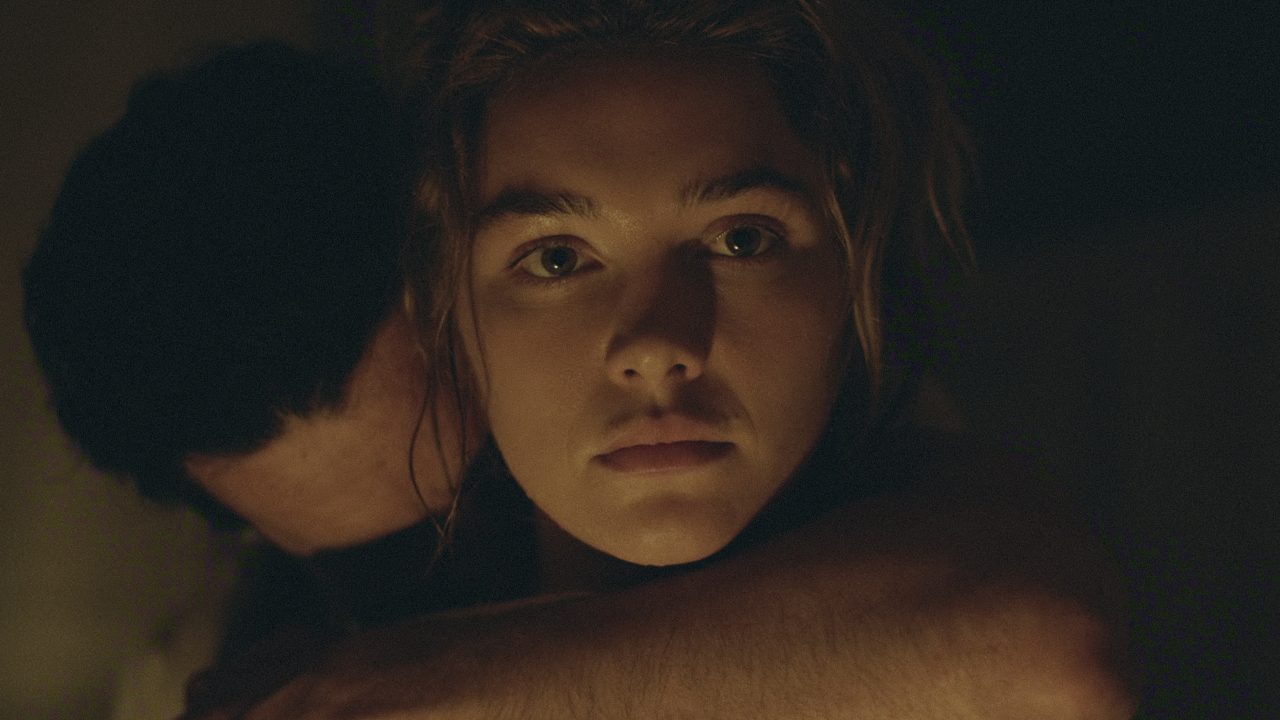
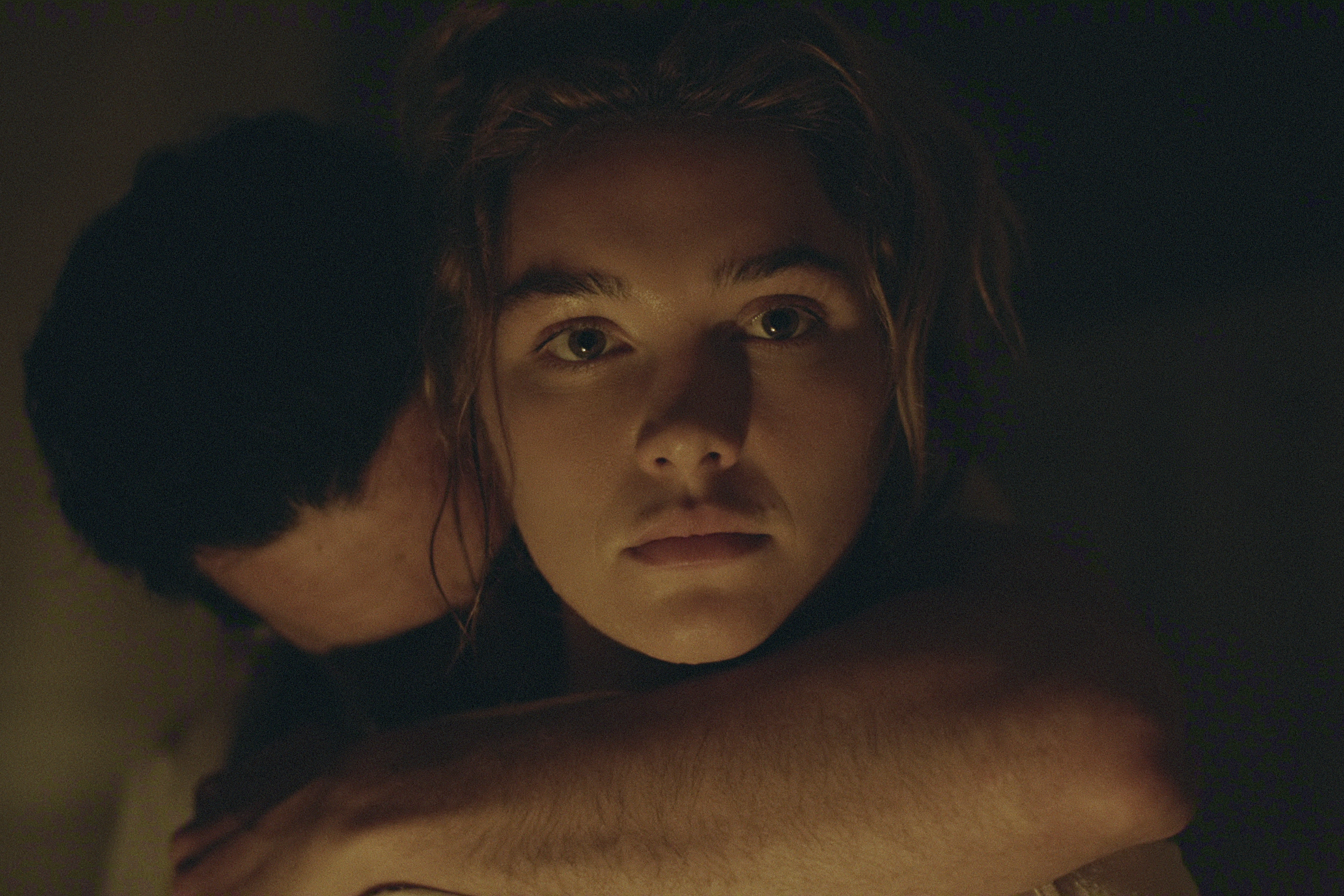
This article discusses all seven episodes of Netflix’s East of Eden.
When John Steinbeck published East of Eden, a top contender for Great American Novel, in 1952, the response to its primary female character, Cathy Ames, was effectively unanimous. Whether they admired or deplored Steinbeck’s portrayal of her, midcentury critics judged Cathy to be pure evil, a veritable Satan in stockings. Male reviewers, which is to say just about all reviewers, disagreed only on the magnitude of her repugnance; while this publication deemed her a “vicious slut,” the New York Times crowned her the “most vicious female in literature.” And why not? She drives a man to suicide and kills her parents while still a teen. She sleeps with her new husband’s brother, gives birth to twins, and promptly abandons them, gravely injuring her shocked spouse as she escapes. Then she ensconces herself at a brothel, kisses up to the madam, fatally poisons the lonely woman once she has willed Cathy her fortune. Her career from there on out is a blur of sadomasochism, blackmail, exploitation, and violence.
It’s hard to imagine a character with this rap sheet as anything short of a psychopath. But here’s a thought experiment, one I often found myself running as I read the great novel and watched Zoe Kazan’s insightful Netflix adaptation: What if Cathy, born into the prison of 19th century womanhood, had behaved less viciously in any of the above situations? She might’ve prevented an adult man’s suicide—but only by becoming his child bride. She didn’t have to murder her parents—but if she hadn’t, her father would have kept beating her at the slightest provocation. She could have fled from her husband-to-be before the marriage, the infidelity, the pregnancy, the gunshot—but she would have been a wounded and destitute and potentially wanted woman, with nowhere to go and doom all but certain. And so on. In other words: Cathy might not have acted much differently if, instead of personifying evil, she were chasing freedom at any cost.
Kazan’s seven-episode series proceeds as if this were the case. It’s a feminist project, in that it takes for granted that a character who happens to be a woman should be given the same humanity as one who happens to be a man. And despite its allegorical nature, with two generations of brothers reenacting the tragedy of Cain and Abel, East of Eden is a book that grants even minor characters unique personalities and preoccupations, good qualities and bad. By now, we’re used to seeing female villains like Cruella de Vil and Nurse Ratched glibly issued trauma-plot backstories and wardrobes that slay and rebranded as meme-worthy badass antiheroes. What makes Kazan’s Cathy refreshing—and Florence Pugh’s mesmerizingly self-possessed performance so moving—is that the character is so firmly grounded in Steinbeck’s Cathy. “I think the text supports my reading,” the creator recently told TIME, and that wasn’t false bravado. She saw no need to invent explanations for Cathy’s ghastly behavior because they were already abundant in the original text. Kazan also evidently understood that to do Cathy justice is not to vindicate or forgive her; it’s to make sure we genuinely see her.
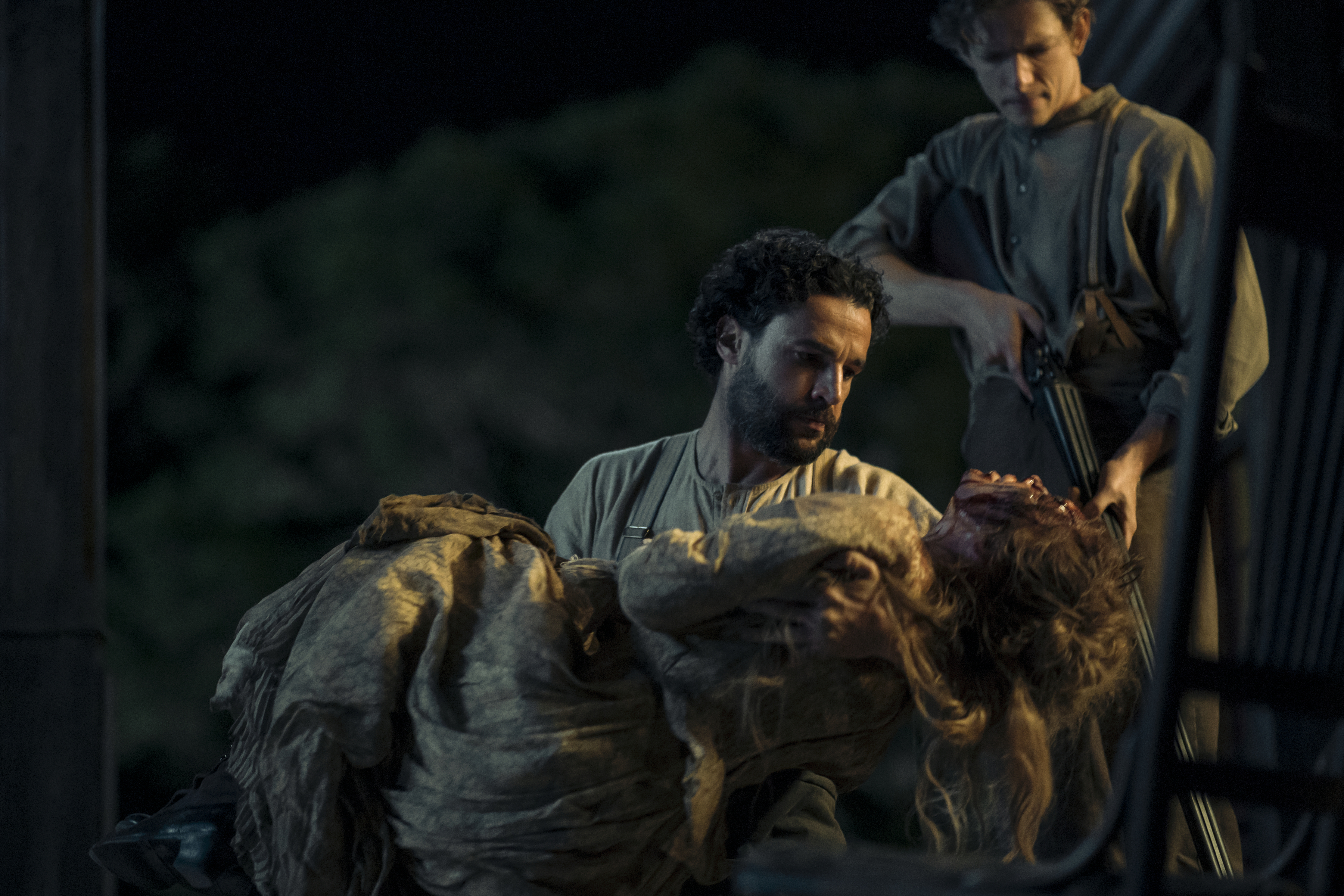
This is the symbolic as well as the literal effect of the series’ opening scene, which replaces Steinbeck’s patient California scene-setting with a flash-forward to a crucial moment that comes significantly later in the chronology. The night sky is so black, it takes a second to perceive Pugh’s brutally beaten and whimpering Cathy crawling on her belly towards the farmhouse where her arrival will change lives for generations to come. “I believe there are monsters born in this world to human parents,” she intones in a voiceover. “A monster is a variation from the accepted normal, to a greater or less degree… Still, you must not forget, everyone is normal to himself. And to a monster, the norm must seem monstrous.” These ideas, and most of the language itself, come straight from Steinbeck’s introduction of Cathy. Kazan’s departure is to put them in her mouth, rather than that of a narrator who resembles the author. In their original context, but even more so in the new one, they suggest a lack of malice on the monster’s part. Can you blame someone for being the only thing she could possibly have been?
The scene also gets viewers used to seeing through Cathy’s eyes, before the premiere backtracks through the lives of rival brothers Adam (Christopher Abbott) and Charles Trask (Mike Faist) up until her appearance at their Connecticut farm. East of Eden’s second episode, “Cathy”—the first of two named after an incarnation of the character—interweaves her convalescence, nursed by the gentle and guileless Adam, with her own origin story. In our earliest glimpse of Cathy, she’s a precocious five-year-old paging through Alice in Wonderland and looking quite a bit like classic illustrations of Alice when an older boy’s outstretched hands offer her candy if she’ll follow him into the woods. (Alice author Lewis Carroll’s biography adds its own dark resonance to the scene.) It’s her choice to run after the sweets; running after sweets is fundamental to her nature. But isn’t it tragic that Cathy’s Eve-and-the-apple moment comes so early in life, and that the implied (then, much later in the series, confirmed) consequence of her decision is a sexual assault that cements her misanthropic worldview?
Pugh told Vanity Fair it was this scene, modified somewhat from an incident in the book where a slightly older Cathy is supposed to have led boys into sin, that drew her to the role: “I thought it was the most beautiful love letter to protecting her as a child. When I read that, I was like, ‘I can get behind her.’ Because I can’t imagine for a moment after that abuse that she’ll ever be the same person again.” Indeed, as she develops more agency, her choices become more selfish and violent. What the schoolteacher (who in our time would be considered an abuser) and her parents have in common is that they try to possess her, to constrict her freedom—a nightmare for any person, but especially for someone whose bodily sovereignty was violated in childhood. When she crawls, half-dead, onto the Trasks’ farm, she has just narrowly escaped murder at the hands of a pimp who made her his mistress, then grew jealous because she wouldn’t reciprocate his love. All of this comes straight from Steinbeck, though Kazan and Pugh put us closer to Cathy’s experience. We feel her fear, her distress, her simple longing to be left alone.
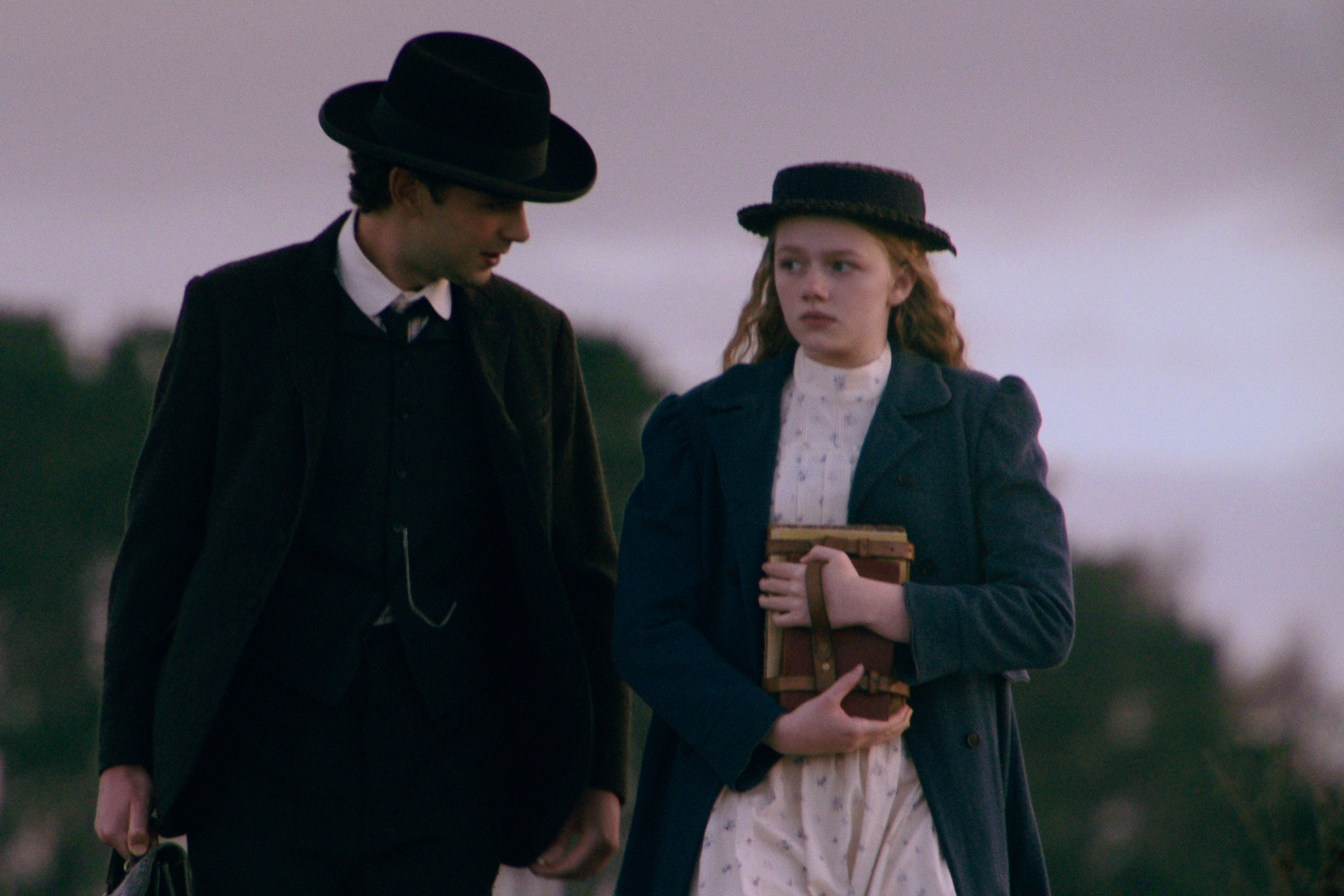
If she ever had love to give—and the series does leave that possibility open—it’s been drained by the time she marries Adam and follows him to a farm in California, pregnant with twins who may be Charles’ biological sons, having duly warned Adam that this was all a very bad idea. So she keeps doing what she’s always done when someone traps her: she escapes, wounding him physically and destroying him emotionally. She does the same to Faye (Martha Plimpton), the madam whose adoption of Cathy as surrogate daughter and official heir comes with the caveat that she can no longer earn her own money seeing clients. Unlike some of her past victims, neither Adam nor Faye deserves the pain she inflicts on them. But they’re casualties of their own denial almost as much as they are of Cathy’s monstrousness. And, in her own horrible way, she’s still just trying to get free. “The only freedom in this world is economic freedom,” she says.
For a character traditionally read as pure evil, she comes off as surprisingly fair-minded and free of wanton malice. Steinbeck made a point of depicting her as such in a passage on how (after assuming the name Kate) she manages the brothel she inherits from Faye: “If they followed the rules she laid down, followed them exactly, Kate would take care of them and protect them. There was no love involved and no respect. She never rewarded them and she punished an offender only twice before she removed her. The girls did have the security of knowing that they would not be punished without cause.” Her sadism, in the book and in the show, is reserved for the hypocritical men who wield power, preach virtue, and demand respect in their public lives, then come to the brothel to indulge in all manner of degradation. And it reflects the outlook she developed at age five—the knowledge of good and evil she gleaned from her bite of the fruit.
As the book progresses, Kazan has rightly noted, “in a weird way, Steinbeck loses control of Cathy as a character and punishes her for that. He starts being really mean about her, like her physical appearance.” She ages unattractively. Arthritis gnarls her hands. But Steinbeck deserves credit for examining every character from multiple angles—even Cathy, to whom he gave more grace, or at least plausible deniability, than critics tended to perceive. “When I said Cathy was a monster it seemed to me that it was so,” he writes at one point. He continues:
“Now I have bent close with a glass over the small print of her and reread the footnotes, and I wonder if it was true. The trouble is that since we cannot know what she wanted, we will never know whether or not she got it. If rather than running toward something, she ran away from something, we can’t know whether she escaped. Who knows but that she tried to tell someone or everyone what she was like and could not, for lack of a common language. Her life may have been her language, formal, developed, indecipherable. It is easy to say she was bad, but there is little meaning unless we know why.”
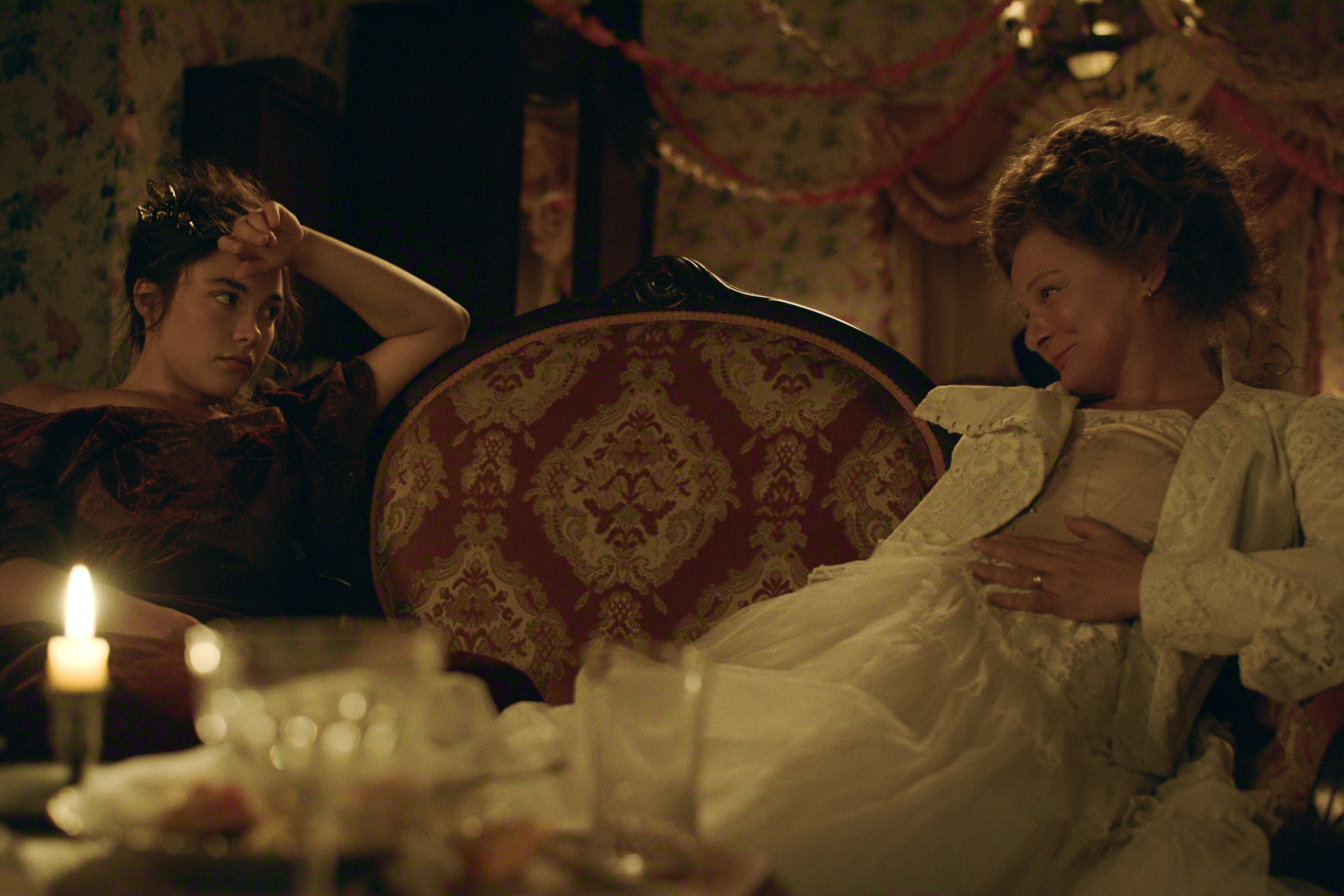
It’s a remarkable admission; an author is supposed to know everything there is to know about their characters, even things it would never occur to any reader to wonder. That Steinbeck instead throws up his hands and tells us that there are aspects of Cathy that will always remain unknowable to him leaves room for precisely the sort of interpretation Kazan and Pugh are doing. Maybe it’s reductive to say they can get closer to her because they are women and know firsthand how much going through life in a female body can feel like having your most cynical assumptions about human nature constantly reaffirmed… but the fact remains that they do get quite close to her. (Though the 1955 film adaptation by Kazan’s grandfather, Elia Kazan, is a masterpiece in its own right, its emphasis on Adam’s sons relegates Cathy to the margins.)
Kazan takes her greatest liberties with the character as her suicide—an act that stems from her delayed acknowledgment that, in fact, her life has no purpose—approaches. She has druggily hallucinated conversations with Charles, the one person she might have once been capable of loving. Cathy is drawn in parallel with the story’s other selfish Cs, Charles and her son, Cal (Joseph Zada). Both come off as better people, though we get the sense that nurture accounts for the difference more than nature. Charles has the means to sequester himself at the farm. Cal benefits from a loving, morally sound upbringing by the brilliant Lee (Hoon Lee) and, ultimately, his father’s blessing. No one has ever given Cathy the permission that Adam, on his deathbed, gives Cal to try to live a good life.
So it’s fitting that Cathy’s final hallucinated encounter is a tearful embrace with the five-year-old in the Alice in Wonderland frock who may have been the last version of the character capable, with more freedom and if not for that boy with the candy, of overcoming her cold nature. Pugh is astonishing in this scene, letting loose a lifetime’s worth of masked and suppressed emotion. The Cathy Steinbeck created was never Satan. She’s more like Eve, and Kazan reinforces that resemblance. Yet this East of Eden leaves us with an alternate image, of Cathy as Alice, chasing the white rabbit of her innate appetites down a hole from which she can never emerge.


Honestly, I preferred the original ambiguity. Giving Cathy a trauma backstory feels like unnecessary modern baggage.
Does anyone know if the show addresses her psychological condition more directly than the book did?
I’m still shocked Florence Pugh agreed to this role. Her performance is genuinely unsettling and brilliant.
Finally, a take that doesn’t try to excusing her cruelty but actually explains it. Powerful.