

The follow-up to her acclaimed 2019 film “Queen of Hearts,” Danish filmmaker May el-Toukhy presents “Woman Unknown” at the Venice Film Festival. As the only female director in the main competition, el-Toukhy offers a provocative but ultimately predictable study of sexual shame set against the backdrop of post-World War II Copenhagen. The film is anchored by a magnetic performance from Mathilde Arcel.
Visually, the film contrasts the rubble-gray and stiff mahogany tones of the era with stark pops of crimson. This color symbolism becomes as unsubtle as the red swastika eventually smeared on the protagonist Marie’s door. While these motifs lack subtlety, they carry a Hitchcockian weight in a narrative about sexual shame and a form of violence against women’s bodies that operates internally.
The narrative is rooted in historical accounts of women from Nazi-occupied countries who faced public punishment for having relations with German soldiers. The crisis begins when Marie’s supposedly soiled sheets become a source of scandal, echoing themes found in films like “Hiroshima Mon Amour” and “The Night Porter.” The film raises uncomfortable questions about whether private lives should be subject to public judgment and real-world consequences.
Arcel portrays Marie as a maid and nanny to the young child of her employer, Christian, a widower who owns a glove-making factory. Carrying herself with restrained tension, Marie exists under the watchful eye of Esther, a stern head maid, and the exacting standards of her workplace. Her aspirations are symbolized by a pearl-white wedding dress dangling in an empty closet, a harbinger of doom when she is spotted by Karl, an old classmate.
Through a jittery encounter with Karl and a subsequent doctor’s visit where Marie replenishes her supply of liquid opium to dull the pain of sex with Christian, her past is revealed. She once had a baby boy, an event that forced her to flee her previous life.
The script, co-written by el-Toukhy and Maren Louise Kaehne, avoids heavy exposition, allowing the imagery to convey the story. Scenes depicting nameless women beaten by gangs, their hair chopped off and bodies branded, clarify what Marie is hiding. The paranoia shifts from echoing empty rooms to whispers among the domestic staff after Karl discovers Marie’s address. Shortly after, her building door is marked with Nazi insignia, driving Marie to desperately cover her tracks.
Cinematographer Jasper Spanning’s static, shadowy compositions eventually give way to shallow-lensed close-ups as Marie spirals into panic. One particularly harrowing scene involves Marie consenting to a wad of spit in her mouth after Karl disregards her boundaries. This moment parallels frigid interactions within the bourgeois milieu she aspires to join, such as when a tailor takes her measurements or Christian uses her hand to model a new glove design. The film repeatedly suggests that her refusal to cede control of her body to male authority will invite wrath.
Arcel conveys Marie’s capacity for tenderness in scenes with children, though these moments may not be sufficient to support the film’s concluding emotional crash. A relationship with a neighboring single mother, who is considered too liberated for midcentury Denmark, provides additional context but feels underdeveloped. The narrative culminates with red appearing again as blood on Marie’s hands, highlighting a sense of feminine betrayal that weighs heavily on her soul.


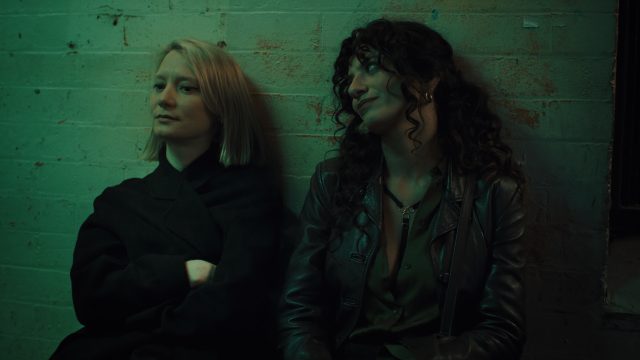
May el-Toukhy’s direction feels heavy-handed. The Hitchcockian vibes were there, but the storytelling lacked subtlety entirely.
The spit scene sounds genuinely harrowing. Did anyone else feel the need to step out of the theater after that?
Is this really predictable, or am I just tired of post-war films focusing solely on female shame? A refreshing take?
Mathilde Arcel is incredible here. That restrained tension she carries is palpable even when nothing happens on screen.
Hate to admit it, but the crimson symbolism was almost too obvious. I kept waiting for a red curtain drop.