
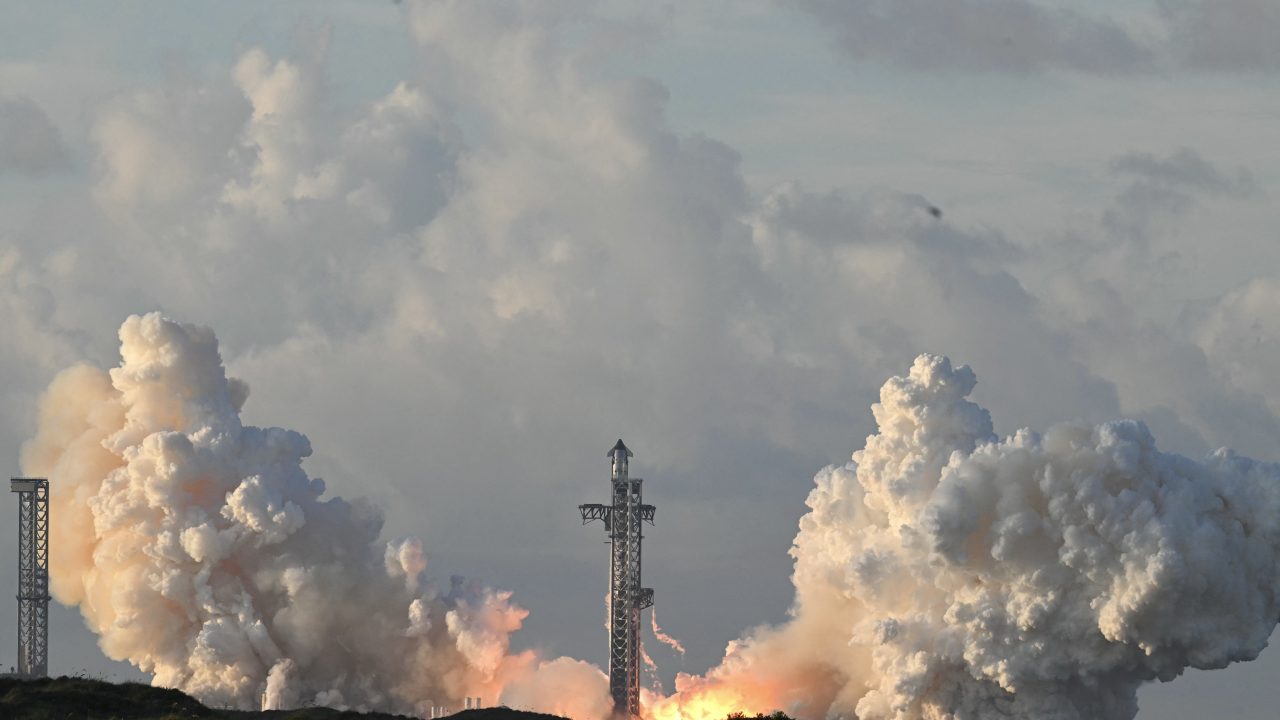
On September 28, 2026, SpaceX achieved a historic milestone as its Starship rocket successfully entered Earth orbit for the first time. This accomplishment occurred during the spacecraft’s 14th launch, fulfilling a promise made since the vehicle’s inaugural test flight in spring 2023. SpaceX confirmed the orbital insertion burn at 9:15 a.m. ET, noting that the journey from its launch site in Starbase, Texas, to a circular orbit 170 miles high took 25 minutes and 17 seconds.
The successful orbital test is a pivotal development for both SpaceX and NASA, as Starship is designed to serve as the primary vehicle for transporting humans to the Moon and Mars. The rocket is also positioned to eventually replace the company’s Falcon 9 workhorse, which accounted for nearly 51% of global commercial launches and 85% of satellite deployments in 2025. With a payload capacity equivalent to approximately five Falcon 9 rockets, Starship aims to consolidate launch operations and reduce costs.
Standing 407 feet tall, Starship is the most powerful rocket ever successfully launched, generating 16.7 million pounds of thrust from its 33 first-stage engines—more than double the output of NASA’s Space Launch System. The vehicle consists of a 236-foot first stage and a 171-foot spacecraft, which is equipped with six engines for satellite deployment and crew transport.
Although the launch involved some anomalies, including one engine failing to burn properly and a simplified return profile involving a splashdown in the Gulf of Mexico rather than the usual “chopstick” recovery, the mission was designated operational. Starship deployed 26 Starlink satellites using its automated release system, contributing to a constellation that currently exceeds 11,000 units. The spacecraft completed the mission early, after three orbits rather than the planned six, as all payloads were successfully delivered.
NASA Administrator Jared Isaacman congratulated the company on X, praising the “gorgeous launch” and expressing excitement for Starship missions to become routine. While this flight marks a significant increment, experts note that substantial engineering challenges remain, including adapting the vehicle for crew habitation and solving complex refueling logistics for deep-space travel. These modifications are necessary before Starship can support NASA’s Artemis III mission in 2027 and potentially carry astronauts to the Moon as early as 2028.
SpaceX CEO Elon Musk has previously envisioned a future where Starship launches occur daily or even hourly, a goal that appears distant given the iterative nature of spaceflight development. For now, the company continues to refine the technology, moving another big step closer to making orbital access more commonplace.


Historic day! Remembering the early failures makes this success even sweeter. Big step for human expansion.
Daily launches sound nice, but getting to Mars before the engine issues are fully resolved feels risky. Hope I am wrong though.
Can we talk about deploying Starlinks during a test flight? That efficiency is impressive and really shows SpaceX’s operational maturity.
The engine failure is concerning. Why wasn’t redundancy better? Deep space doesn’t forgive simple glitches like the Gulf splashdown does.
Finally! It took fourteen tries, but we are officially there. The wait is over.